


Vertical vs. Horizontal Fencing: Classic or Contemporary
Do you want a classic vertical fence or should you go for a horizontal fence design? Consider materials as well as design, including if you need a privacy fence or something modern and new. Here are the pros and cons of vertical and horizontal fencing, and how to get the project done with help from the experts at McCoy's.
Before you start, check-in with your neighbors, double check your property lines, buried utilities locations, and city permit laws. You'll also want to confirm any HOA rules that require certain materials, colors, or other considerations when it comes to fencing.
Traditional Vertical Fencing
Vertical fencing is considered a "traditional" fence style. It features fence posts anchored into the ground and fence panels made up of horizontal rails that hold each section of vertical fence pickets.
Note: For this article, we're focusing on wood fencing materials. For metal and wire fencing, check out our ranch fencing solutions or learn about T-post fencing.
How to Install a Vertical Fence
Fence installation is labor-intensive, but a straightforward process for at least two people. Measure the full distance for your fence, account for where you want to install a gate (or gates) and gather enough materials to complete your project (plus a bit extra just in case).
Tip: Use the handy McCoy's fence picket calculator to see how many you'll need.
Materials and tools:
- Fence posts
- Fence pickets and horizontal fence rails
- Concrete
- Gravel (or other base fill)
- Twine or Mason's line
- Wooden stakes
- Scrap wood for fence post temporary braces
- Marking pencil for posts
- Screws (appropriate for your materials)
- Cordless screwdriver and drill
- Shovel or post-hole digger or auger tool
- Long tape measure
- Level
- Mixing bucket or wheelbarrow for concrete
- Gate latch hardware and hinges (as needed)
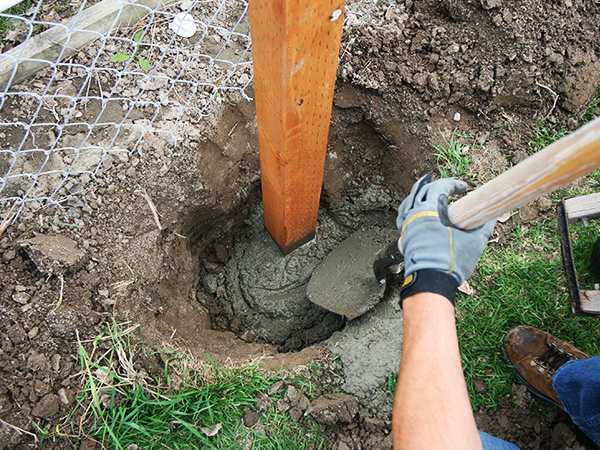
Once you measure and mark the ground for your fence with string and wood stakes, dig holes for your first two posts. The holes should be about a quarter to a third the length of the post and three times as wide. Add base fill, like gravel, to about 4-inches depth, to help support the posts and add drainage and help prevent rot. Set the post on top of tamped down gravel. Add temporary braces and double check the post isn't leaning. Once plumb, add concrete mix per directions to about 3-4 inches below ground level. When it's set, you can add dirt or topsoil to the fence post hole. Repeat digging holes for all your posts and setting them in concrete for your entire fence run.
After the concrete is cured around the post (quick-set concrete can set in 20-40 minutes, but other concrete can take up to two days depending on the conditions), you can attach your fence rails to the posts. Then attach vertical pickets to the rails with wood screws.
- Pros of vertical fencing
- Traditional design with lots of options for pickets and materials
- A good choice for uneven yards with slopes or wide-ranging landscape
- Affordable, because it's the most common design
- Cons of vertical fencing
- Gaps between pickets coupled with wood shrinkage can affect your fence's appearance over time (seal the ends to help prevent issues)
- It's not as modern looking, and can impact how your home is dated
What Does it Take to Create a Horizontal Fence?
Horizontal fencing is installed almost the same way as a vertical picket fence. You'll dig post holes the same, but the distance between posts will depend on your choice of horizontal picket lumber. For example, you may need to have posts closer to provide enough support for your horizontal pickets (aim for posts at most 6-feet apart). You won't, however, need the rails used in a vertical fence. In the case of horizontal wood fencing, you'll select pickets that are laid horizontally from post to post.
In addition to the fencing tools and materials above you'll need these to install a horizontal fence:
- Horizontal picket wood
- Saw (as needed)
- Angle measure (as needed)
- Wood for a finishing "top cap" (as needed)
Once you set your posts, install the pickets in a horizontal fence to the posts with wood screws. Place each horizontal picket with spaces between as desired for privacy and design. You can choose horizontal pickets in long lengths (like 12-foot long California Redwood) for long sections that can be installed quickly.
If your property is on a slope, you can cut your pickets to length as the ground rises and falls between posts. Use the angle measure to ensure a clean fit of your pickets. You can also change the lengths of the pickets as you go along to make an interesting fence design.
- Pros of horizontal fencing
- Offers a modern look
- Makes a yard look wider, which can be visually pleasing
- Typically, a stronger fence than vertical fencing
- Can offer an easy installation on level ground
- Cons of horizontal fencing
- Typically, more expensive. Uses stiffer, high-end lumber to prevent sagging
- Repairs may be more difficult, since it's a less common option
- Keep pickets closer together to avoid issues of security (leave little space for hand or footholds to climb the fence)
Build Your New Fence with Expert Help
Ready to get started on your new fence? McCoy's has everything you need to carve out your private space, including treated lumber, cedar posts and pickets, hardware, tools, and expert guidance.