


Get a Grip! Common Types of Pliers
There's more than just one type of pliers; here's how to pick the best one for the job. With the right tools, you can make those DIY projects go faster!
Basic Parts of Pliers
All pliers share some common components. Pliers come in a variety of sizes, but you can identify pliers from other tools because they all have jaws, handles, a pivot point, and some also have cutting edges.
- The jaws open and close to grasp the object. Long and thin jaws can fit into tight spaces or grip small, thin items. Some jaws contain serrated teeth of varying sizes, depending on the tool.
- The handles of pliers are often encased in non-slip material like rubber, which also acts as an insulator (handy when working on wiring) and makes them easy to hold.
- The pivot point, where the handles meet the jaws, is essential to create enough pressure to manipulate the object you grip with the pliers.
- Some pliers also have cutting edges that let you easily snip material, like metal wires. They also enable you to cut a straight line on sheet metal by opening and closing the pliers.
Pliers are great for all sorts of tasks, including gripping, twisting, bending, pulling, and cutting. But you should make sure to get the right pliers for your project. The good news is that they can handle just about anything.
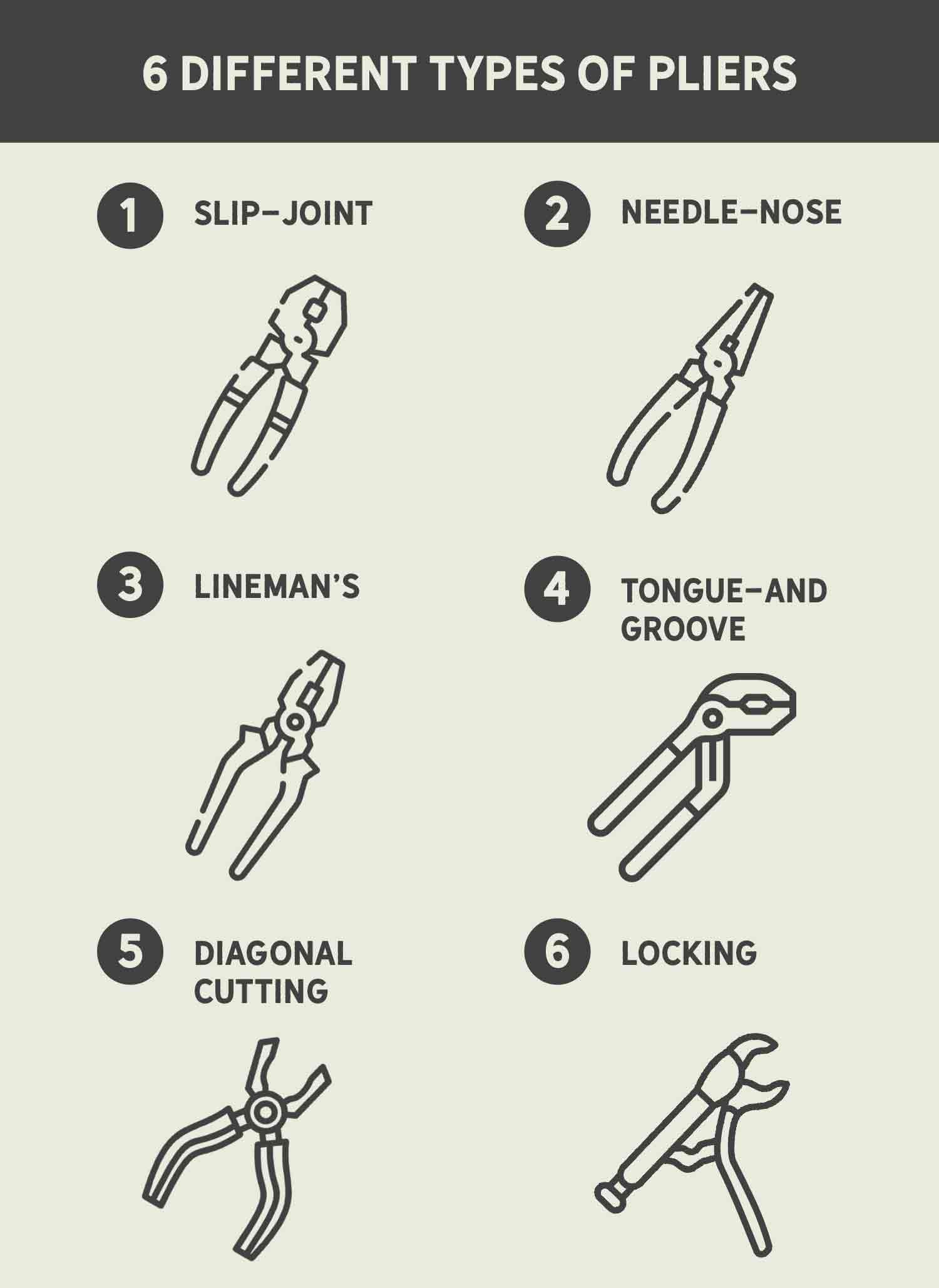
6 Different Types of Pliers
- Slip-joint: With an adjustable jaw, slip-joint are all-purpose pliers. Their jaws can adjust at the pivot point, allowing you to grip items of different thicknesses with the same tool. Usually there’s also a round, open space at the back of the jaw, which lets you grip objects like pipes.
- Needle-nose: Great for working with small items, like jewelry or electronics, needle-nose pliers have long and narrow jaws. They are ideal when you need to fit a tool into tight spaces, such as circuit boards or electrical boxes. Keep a pair of these handy for making small repairs around the house.
- Lineman's: Sometimes called "side-cutting pliers" or "electrician's pliers," Lineman's can both grip and cut, making them great for electrical repairs (like on a power line). They’re essential for electrical repairs and can help if you need a strong tool to twist or cut wire. With shallow serrated teeth, they're also helpful for gripping sheet metal.
- Tongue-and-groove: Plumbers often have a favorite pair of these adjustable jaw pliers — which are perfect for gripping and fitting pipes. You might refer to this type of pliers as Channellock, but that’s actually a brand name (like Kleenex), not a type. They feature an angled head, which helps you get into tight places such as under sinks, and their serrated teeth help to grip pipes, nuts, and bolts.
- Diagonal cutting: When you need to make sharp cuts in wire, zip ties, or other small fasteners, diagonal pliers are an ideal tool. They have a strong, sharp cutting edge along their jaw and come in a range of sizes. If they become dull, they can be sharpened.
- Locking: Just like the name says, these pliers lock onto objects. You may refer to them as Vicegrips, but that's another brand name and not a tool type. They can make easy work of stubborn bolts and make a great workshop tool.
Quick Tips to Keep Your Pliers Working Well
The right tool can make a project run smoothly. Make sure to match your pliers to the task at hand. Too large of a pliers and you can damage what you're trying to grip.
Make sure to also treat your pliers carefully. Even though they come in large sizes and can work on tough materials, don’t use pliers in place of a wrench (you can strip a bolt with the serrated jaw). And definitely don't bang on anything with pliers, even hefty ones. They're not a hammer. (If you need a combo tool to hammer with, try a pair of fencing pliers.)
Finally, keep your pliers' jaws clean, especially after working on rusty or dirty materials. Look at the tool manufacturer’s suggestions to see how to keep the pivot point lubricated and the best way to clean your pliers if needed.
Our Best Hacks
Some ways you can get more use out of your favorite pliers can surprise you.
- For example, use your locking pliers to hold a flashlight and keep your hands free for other tools. Grab the flashlight, tighten the locking pliers, then use the base of the pliers to create a mini stand to hold the light.
- You can also use your pliers with a wide rubber band to improve your grip on stuck bolts or stripped screws. Note: Need more help loosening a stripped screw? Read our article for easy steps.
- Use needle-nose pliers to hold that tiny nail in place, so you don't hit your fingers with the hammer.
- Concerned about leaving marks with your pliers? Use something protective on the jaws. You can utilize fingers from an old pair of leather gloves, an old garden hose, or even electrical or duct tape.
Get to Work with McCoy's
Whether you're tackling a new house project or just rounding out your toolbox, picking the right types of pliers can keep you ready to get that DIY done. Talk to the experts at McCoys about what pliers will help you get to the finish line.